Instagram AmazingRibs Facebook AmazingRibs X - Meathead Pinterest AmazingRibs Youtube AmazingRibs

Welcome!


This is a membership forum. Guests can view 5 pages for free. To participate, please join.

[ Pitmaster Club Information | Join Now | 30 Day Trial | Login | Contact Us ]

Only 4 free page views remaining.

Announcement

Collapse
No announcement yet.

Brisket Questions

Collapse
X
 
  • Filter
  • Time
  • Show
Clear All
new posts

    Brisket Questions

    I cooked a brisket yesterday. Sorry, I didn't think to take pictures until it was too late. I need to remember that I need pictures. I came up with a couple questions. The brisket was cooked at 275. I wanted to do the rest and hold technique that BBQ_Bill outlined in Cloud_Lnn 's recent post. The brisket was about 9 pounds after trimming and cooked in 5 hours or so. It came out very good though part was a little dry according to the judge.

    My first observation is that there was no stall. My guess is that it is a function of the higher cooking temperature. The stall being the evaporative cooling is equal to heat added to the meat by the surrounding air. The higher temperature is basically overwhelming the cooling effect. That's my guess. Does anyone have any experience with this or able to shed light as to what is going on?

    Having motored through the stall range, when the temperature reached 180, I wrapped in foil. Left it there until it reached 203. I read that I should start probing about 195. How do you probe the wrapped meat? Do you keep punching through the foil or paper until it is tender? I ran to 203 because I wanted to minimize the number of times that I wrapped and unwrapped the meat.

    I rested the meat on the counter until it was 140 and then put it in the oven. The oven was as low as it would go which was 170. After about an hour, I checked the meat and it was 177 so I wrapped it in a towel and placed it in the cooler. BBQ_Bill said he rests at 100 and holds at 140. How do you do that?

    Again, Thanks for all your help and advice.

    #2
    You can probe through the foil when you wrap it. I do. No stall is most likely due to cooking temp of 275.

    As to resting and holding .... I take the brisket straight from the smoker to either a faux cambro or my oven, not the counter. I keep it wrapped and hold it at 170. I give it at least an hour hold. When I’m close to time to slice the meat, I move it to the counter and rest until the temp falls to between 140-150.

    Comment


    • SparkDog
      SparkDog commented
      Editing a comment
      The last couple times, i went straight to the cooler/faux cambro. I tried the opposite this time since I read that going straight to the cambro may cause the meat to continue cooking. It is also good to know that probing through the foil won't hurt anything.

    • bardsleyque
      bardsleyque commented
      Editing a comment
      I probe through the foil and it never gets tender(the foil that is)!

    #3
    Howdy SparkDog
    I do not have as much experience as some of the others here but have had my share of dry flats, head-scratching and many frustrating trials in trying to get things moistened up.
    I have heard that practice helps, and so I have been practicing for the last couple of years on over 200 packer brisket smokes.
    -
    I agree with ecowper in that at 275°F you are probably "powering" through the stall and won't see it.
    By the way, this is the temperature that Aaron Franklin cooks his briskets at.
    I've also heard it said that the Texas Crutch (foiling) will help with moisture loss.
    I really can't say, as I have only used butcher paper.
    Am figuring that at 180°F before wrapping, a fair amount of moisture has been lost, but then I'm torn between getting great bark and having great moisture...
    -
    Basically, wrapping earlier will retain more moisture, but reduce the quality of the bark.
    In a compromise, producing a fairly good bark (but not incredible) I do find it important to give each packer a fair amount of help in regards to the perceived moisture in the flat when customers are eating it.
    I've read that Salt expands the taste buds and triggers saliva which is a part of the moist mouthfeel.
    Therefore, I want the right amount of salt, so I trim and weigh each packer, and then measure out 1/2 TEA-spoon of Kosher salt per pound of meat, placing that salt into a shaker bottle.
    After an Apple Cider Vinegar spritz, the measured salt is carefully sprinkled on, as evenly as I can, covering the edges of the trimmed meat as well.
    I then vacuum bag each carefully salted packer down tight, and place each one into a 33°F cold hold for about a week.
    This process is called a dry brine, which allows some of that salt to penetrate into the meat, which I read will then hold on to moisture better.
    So, in my experience... dry brisket flats can also be helped along towards being more moist by the following:
    1) I try to choose a brisket with a higher fat content. (High Choice or even Prime)
    There is a reason why the point muscle of a packer is called "moist" at most restaurants.
    It has a higher fat content (marbling) and will hold up better in the cook in regards to drying out.
    The point is basically the more moist cut at the dinner table when all is said and done.
    By purchasing a packer with a more marbled fat content, I feel that my chances of a moist flat are greater.
    2) I trim my packers per Aaron Franklin's instructions, leaving about 1/4" layer of fat on the fat cap side, with that being a good general rule.
    The fat cap side is then placed towards the main heat source in my smokers.
    The point has a higher fat content, and takes the heat better than the flat without drying out, so the point end goes towards the heat manifold in my smokers.
    For me this helps the flat to hold onto more moisture as well.
    3) I also smoke and cook with water in-between the heat source and the meat I am smoking or cooking.
    I believe that this helps keep more moisture in the air. Most pitmasters agree that this is a good thing.
    4) I fine spray spritz the meat surface as it begins to look dry. This slows down the dehydration of the surface and allows the internal and external temperatures to stay more even, which in turn allows the collagen and fat rendering to occur at near the same time. This is a good thing per people with extreme brisket experience.
    5) When the flat is probing correctly (done) I pull that packer from the heat, open the wrapping, and then distribute 3/4 cup of boiling water inside the wrap.
    I then re-wrap and rest that packer with the fat cap UP at around 110°F until the sweet spot in the flat drops to about 145°F to 150°F.
    This two-hour rest stage allows the meat to relax and most of the expelled moisture as well as most of the added water is drawn into the mass, redistributing moisture throughout.
    6) A long moist hold at 148°F will degrade the bark a bit, but also helps as far as moisture in the flat.
    -
    This is all that I can think of in regards to dry flats for the moment.
    Your "mileage" may vary with the above advice, but keeping good notes helps me quite a bit and is highly recommended.
    Last edited by BBQ_Bill; February 4, 2019, 01:28 AM. Reason: Remembered more "stuff"

    Comment


    • RonB
      RonB commented
      Editing a comment
      Great explanation Bill.

    • SparkDog
      SparkDog commented
      Editing a comment
      Thank you very much for your response. Several things to try here. One more question. How do you hold at low temperatures? The lowest my oven goes is above 170 somewhere. Maybe choke down the smoker to get the lower temp?

    #4
    I have cooked over 100 briskets, and I cook everything at 275. I spray them every 45 mins with my injection. I usually smoke for 4 to 5 hours. I them pull them, squeeze butter on them, wrap and put back on till 202. I pull them and put them in my Cambro for at least 2 to 4 hours. I have never had a dry one. It does make the bark a little soft but it works.

    Comment


    • SparkDog
      SparkDog commented
      Editing a comment
      I have never injected my meat so i will have to try that. The seasoned spray sounds like a good way to enhance the flavor.

    • Paulie Brisket
      Paulie Brisket commented
      Editing a comment
      Never thought about butter on brisket. I inject with beef broth before it goes on ... I'll have to think on the butter ...
      Cheers!

    #5
    SparkDog Over the years I've developed a few tips/tricks for brisket
    1. Buy good quality whole packer - Costco Prime is my go to, but I can get a great brisket from my butcher, too.
    2. Trim aggressively .... fat does not penetrate and baste the meat, but it does get cut off by most of your guests and your rub is cut off along with it.
    3. Don't wrap until the end of the stall, if you must wrap
    4. Absolutely dry brine for a minimum of 24 hours prior to cooking
    5. Cook at 250F, or even a bit hotter. I think down at 225F contributes greatly to drying out the meat.
    6. Meat temp is only a guide. It's done when it is probe tender, somewhere between 190-205.
    7. Definitely hold the brisket, wrapped, in a faux cambro or the oven, at 170F, for at least 1 hour (preferably 2)
    Here's a fairly extensive post I wrote for a friend on brisket technique. It may be helpful.

    https://pitmaster.amazingribs.com/fo...brisket-method

    Comment


    • ecowper
      ecowper commented
      Editing a comment
      If you are cooking choice, you might well consider injecting. A lot of folks seem to find that works well.

    • wcpreston
      wcpreston commented
      Editing a comment
      ecowper What do you think about injecting prime? I bought some injection stuff but haven't used it.

    • ecowper
      ecowper commented
      Editing a comment
      wcpreston I don't really know, since I don't inject. I think it probably will give you a flavor impact, though, just like dry brining does.

    #6
    I caught an interesting Harry Soo video on YouTube over the weekend where he cooks his briskets pretty much in a conventional manner, wraps in foil for the crutch, then literally pours an entire 8 oz. can of Campbell's beef broth slowly over the brisket before putting it back on. He did it slowly enough to allow the broth to fully absorb into the meat. Interesting approach, even more interesting is his slices through the flat after cooking were oozing with moisture.

    Not something I'm going to run out and try but the guy wins a lot of cook offs, hard to argue with his success.

    Comment


    • Murdy
      Murdy commented
      Editing a comment
      Does pouring that much liquid over it totally destroy the bark?

    • BBQ_Bill
      BBQ_Bill commented
      Editing a comment
      That is a cup of moisture. I have not found a beef broth that I like well enough, so I am with you in that my friend.

    • BBQ_Bill
      BBQ_Bill commented
      Editing a comment
      @Murdy
      It softens it on the flat, so the "crunch" is gone, but I use butcher paper, and am not sure about foil. Holding with all that moisture degrades the bark, but it is still better than most all of the restaurants here in my area.

    #7
    I've cooked/smoked maybe two packers on one of my off-set smokers. For low temperatures less wood and a smaller fire might work to keep it at that low holding type temperature.
    After the very 1st ones, all of my briskets have been smoked in thermostatically controlled, wood-fired, convection smokers. (KBQ C60's)
    In early November of 2016 my first KBQ arrived and after a few smokes I did try smoking packers hot and fast.
    The flat ends on the "corners" sizzled, and the meat under the bark dried to an off color, sort of a dark caramel color.
    These areas that sizzled were hard and dehydrated.
    So, I started spritzing these areas like crazy trying to keep them from sizzling.
    That didn't work...
    Looking for advice, I read where Aaron Franklin said you do not want the meat to sizzle, so lower your smokers temperature until it stops.
    So I kept lowering the temperature afterwards, 5°F at a time, trying hard to stop the sizzling of the meat.
    Basically, I wanted to get them done faster but finally gave up on higher temperatures.
    Am figuring convection (Like a hair dryer) is why I cannot cook hotter.
    These smokers are good to hold or cook anywhere from 130°F to 325°F.
    -
    Holding:
    I purchased two full height Metro C5 9 Series holding cabinets to hold brisket in.
    They will hold up to 200°F max temperature with full humidity control as well.
    Before them, I used my oven which goes down to about 160°F but not consistently as it creeps up to about 170°F at times.
    My dehydrator will nicely hold six packers at accurate temperatures anywhere from 100°F to 160°F.
    (Obviously they must be well wrapped to prevent moisture loss)
    I have found with convection heat, wrapping towards the end of the stall to conserve moisture is imperative.
    According to a friend here in The Pit, a good ice chest/cooler with a heating pad works for him.
    Am thinking that a temperature probe would help one to adjust the heat to around 140°F to 160°F for holding.
    -
    Gotta jump in the shower.
    My best!
    Bill
    Last edited by BBQ_Bill; February 4, 2019, 10:58 PM. Reason: Fix bad grammer, some typos, and add some more info.

    Comment


    • hogdog6
      hogdog6 commented
      Editing a comment
      BBQ_Bill What Metro C5 9 Series holding cabinet do you use? Looking it up there are several options.

    • BBQ_Bill
      BBQ_Bill commented
      Editing a comment
      Both are C599-NDC-U models with double Dutch glass doors. They will comfortably hold 16 large packers each with two packers per sheet pan. The aluminum cookie/bun sheet pans it takes are the large ones, way too big for my KBQ or kitchen oven at 26" x 18". Price was great on these holding cabinets as they came from a Texas restaurant that had recently closed down.

    #8
    Jerod Broussard probably has some good thoughts, also

    Comment


      #9
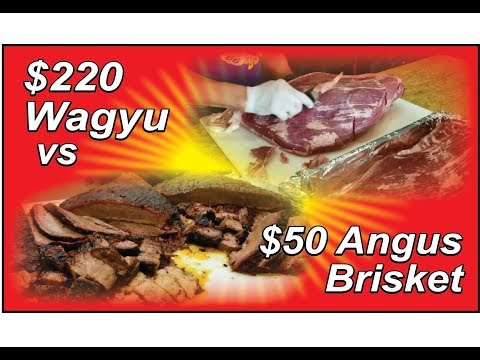
      Not to beat a dead horse, but here's that Harry Soo YouTube video. He compares a $222 SRF Wagyu brisket to a $50 Choice one. That's interesting in and of itself, but it's here where he literally pours cans of beef broth all over the briskets just before crutching with foil. He seems to get some pretty decent bark regardless.

      Another interesting point, he never "holds" his brisket, instead he cuts open the foil and lets them "rest" until they cool down to about 170* then he slices. Some of the stuff this guy does is a bit unconventional but hey, as I said above the guy has an entire house full of trophies that talk to his success...

      Comment


      • jharner
        jharner commented
        Editing a comment
        Thanks for sharing the video, enjoyed it.

      • BBQ_Bill
        BBQ_Bill commented
        Editing a comment
        I really enjoyed watching Harry Soo in BBQ competition such as SMOKED. Great guy.
        Very cool video Troutman Thanks for sharing!

      #10
      My main take away from experience with super tender Prime is that if you inject with beef broth ahead of time and wrap at the stall, you can still over-cook it and dry the ever-living crap out of the flat.

      I've cooked better and more juicy Choice flats than what was cooked above, and those Choice briskets were wrapped around 195 internal, and cooled unwrapped to allow to steam off before placing under proper refrigeration. Juicy in this context refers to a nice little "slick" at slicing.

      Moral of the Story- Too many people are looking for super juicy brisket flats. Cook a flat to tenderness and collect some juices (or make a mop sauce) in case it is a tad more dry than you like, it's brisket, not medium-rare ribeyes.

      Comment


      • Henrik
        Henrik commented
        Editing a comment
        Word.

      • BBQ_Bill
        BBQ_Bill commented
        Editing a comment
        @Jerod Broussard
        Please clarify your procedure when you get time.
        You stated that you wrap at 195°F, which for me is late, well after the stall and may or may not probe tender at that high internal temp. Do you then continue to cook "looking for" probe tender? Also, please explain when in the process you unwrap to release steam. The "before refrigeration" has me lost.
        Last edited by BBQ_Bill; February 5, 2019, 07:55 AM. Reason: Softened" my questions a bit.

      • Troutman
        Troutman commented
        Editing a comment
        Yea I'm a bit lost at this procedure too.

      #11
      I cook all of my briskets at around 300 F and all of them have stalled so far.
      I initially cook to the color and crust I want and then wrap. Only then do I insert a temp probe. Consistently my temps are around 160-165 when that happens.
      I wrap tightly in double foil and I don’t start probing until my internal temps are 200 F. I don’t add anything to the wrapped brisket as I find the brisket produces enough juices of its own.
      I gently unwrap the foil to probe my briskets (not all the way, of course).
      I pull my brisket off the cooker when my flat probes the way I want it (i.e. very little resistance). For me that is consistently around 208-210 F internal.
      I personally only use Costco USDA prime packers in the 13-15 pound range.

      Comment


      • ColonialDawg
        ColonialDawg commented
        Editing a comment
        I don’t use any moisture. I might spritz with water, although I am not sure I am going to continue doing even that, since I did not spritz the last brisket I cooked (and the results were the same). What I have never done is not wrap so I honestly don’t know how long the stall would last if I did not wrap. It’s an experiment I might try one day just out of curiosity.

      • SparkDog
        SparkDog commented
        Editing a comment
        I will have to watch my temperate more closely. All I can figure, based on your reply, is that I missed it. Maybe I need one of those toys that records the temperature and makes the graph. Thanks for getting back to me.

      • ColonialDawg
        ColonialDawg commented
        Editing a comment
        There is never bad excuse to cook another brisket!

      #12
      Well ColonialDawg
      You have inspired me to try to raise the temperatures once again in these KBQ's.
      I'll creep up a bit each cook as my color and crust is simply not where I want it when they hit 160°F to 165°F.
      Would be really sweet to have a 10°F lower IT when I wrap!
      Way less moisture loss at that temperature I feel...
      -
      This is a photo of one of last Saturdays three packers just before I wrapped it.
      I too wrap at color, and am wanting a very dark maroon bark before I wrap.

      Click image for larger version  Name:	175.jpg Views:	1 Size:	1.51 MB ID:	632555

      BTW, like you, I have been using Costco prime packers for quite awhile now.
      I have however, actually just now stopped buying them and this last weekends cook was from a different source.
      -
      Reason is that I've found a good supply of Certified Angus high choice for $3.18/pound.
      The Prime Costco's were $2.99/pound but the extra $.19/pound for certified no Dairy influence beef is worth it to me.
      At request, the meat manager there at this new supplier was very cool, and opened the cases.
      We then went through each of them.
      He allowed me to choose the ones I wanted which was very nice.
      Reminded me of the days when I was buying Fry's Foods briskets.
      Larry, the butcher and I would go through case after case, loading up my cart with the "gooders".
      I like 15/16 pound packers hoping for older, more flavorful beeves.
      -
      This new suppliers NAMP 123 cryopak ribs were beautiful but WAY expensive!
      My wife really likes them, so I went ahead and got one pack of 6 ribs for her.
      You know, happy wife, happy life
      -
      Smoke On!
      Last edited by BBQ_Bill; February 5, 2019, 07:19 AM. Reason: Clarify who the "Cool" meat manager was working for.

      Comment


      • BBQ_Bill
        BBQ_Bill commented
        Editing a comment
        Thanks ColonialDawg
        I believe that the Maillard Reaction is responsible for the darkening, and mine get darker in the paper as well. I don't add any liquid until done and pulled to rest.

      • hogdog6
        hogdog6 commented
        Editing a comment
        BBQ_Bill great looking brisket.

      • JeffJ
        JeffJ commented
        Editing a comment
        The color on that brisket is amazing.

      #13
      You know there was a pitmaster, and his name doesn't come to mind, but he talked about this old boy that swore up and down that the right hand briskets always cooked better than the left hand brisket. When he went brisket hunting he always had, more than anything else, a right handed one. I always chuckled at that, does that mean all cows are right hoofed ??? Anyway, your comment looking for "gooders" BBQ_Bill reminded me of that (we would refer to them a "goodins" btw).

      Now I wonder if there is any truth to that ??

      Comment


      • BBQ_Bill
        BBQ_Bill commented
        Editing a comment
        Aaron Franklin spoke about that. Some were saying that because cattle lay on one side when resting, the brisket on the other side becomes more tender or something along that line. I find it too funny!

      • BBQ_Bill
        BBQ_Bill commented
        Editing a comment
        Oh, and the briskets are ALWAYS bigger in Texas too... huh!

      #14
      So much data!!!! Overwhelming!!!!

      Comment


      • ecowper
        ecowper commented
        Editing a comment
        we do what we can to help :-)

      • BBQ_Bill
        BBQ_Bill commented
        Editing a comment
        Lol!

      #15
      Thank you all for your methods, insight and videos. I have so much to think about now. I will try again in a couple weeks. I think I will give my wife a break with some ribs or another butt before I hit the next brisket. Again, thanks to all of you!

      Comment

      Announcement

      Collapse
      No announcement yet.
      Working...
      X
      false
      0
      Guest
      Guest
      500
      ["membership","help","nojs","maintenance","shop","reset-password","authaau-alpha","ebooklogin-start","alpha","start"]
      false
      false
      Yes
      ["\/forum\/free-deep-dive-guide-ebook-downloads","\/forum\/free-deep-dive-guide-ebook-downloads\/1157845-paid-members-download-your-6-deep-dive-guide-ebooks-for-free-here","\/forum\/the-pitcast","\/forum\/national-barbecue-news-magazine","\/forum\/national-barbecue-news-magazine\/national-barbecue-news-magazine-aa","\/forum\/national-barbecue-news-magazine\/national-barbecue-news-magazine-aa\/bbq-news-magazine-2019-issues","\/forum\/national-barbecue-news-magazine\/national-barbecue-news-magazine-aa\/bbq-news-magazine-2020-issues","\/forum\/national-barbecue-news-magazine\/national-barbecue-news-magazine-aa\/bbq-news-magazine-2021-issues","\/forum\/national-barbecue-news-magazine\/national-barbecue-news-magazine-aa\/bbq-news-magazine-2022-issues","\/forum\/national-barbecue-news-magazine\/national-barbecue-news-magazine-aa\/current-2023-issues","\/forum\/national-barbecue-news-magazine\/national-barbecue-news-magazine-aa\/current-2024-issues","\/forum\/national-barbecue-news-magazine\/national-barbecue-news-magazine-aa\/current-2025-issues","\/forum\/national-barbecue-news-magazine\/national-barbecue-news-magazine-aa\/current-2026-issues","\/forum\/bbq-stars","\/forum\/bbq-stars\/tuffy-stone","\/forum\/bbq-stars\/meathead","\/forum\/bbq-stars\/harry-soo","\/forum\/bbq-stars\/matt-pittman","\/forum\/bbq-stars\/kent-rollins","\/forum\/bbq-stars\/dean-fearing","\/forum\/bbq-stars\/tim-grandinetti","\/forum\/bbq-stars\/kent-phillips-brett-gallaway","\/forum\/bbq-stars\/david-bouska","\/forum\/bbq-stars\/ariane-daguin","\/forum\/bbq-stars\/jack-arnold","\/forum\/free-deep-dive-guide-ebook-downloads"]
      /forum/free-deep-dive-guide-ebook-downloads