Instagram AmazingRibs Facebook AmazingRibs X - Meathead Pinterest AmazingRibs Youtube AmazingRibs

Welcome!


This is a membership forum. Guests can view 5 pages for free. To participate, please join.

[ Pitmaster Club Information | Join Now | 30 Day Trial | Login | Contact Us ]

Only 4 free page views remaining.

Announcement

Collapse
No announcement yet.

Propane tank needle valves

Collapse
X
 
  • Filter
  • Time
  • Show
Clear All
new posts

    Propane tank needle valves

    I am gun-shy about but use propane. Have a needle valve on a propane fueled wok burner; it works fine to regulate the flame.

    Am considering a needle valve for Camp Chef Smoke Vault 24. The valve on the unit is very fiddly, very small dial movements result in significant flame size changes. Is my idea feasible? If so, open valve on smoker wide open and regulate with needle valve? Apparently there are both low and high pressure valves. Is coming off a propane tank low pressure? Does it make a difference?

    I put this under Fuel, Gas because the issue seems to apply to any propane fueled smoker.

    #2
    Super great question, because I have considered this for the exact same cooker!

    I use my Smoke Vault most often as a holding oven, honestly, so being able to turn it down a bit more would be handy. During summer temps, keeping it under 175 or so requires propping the door open. In winter, I can keep it at 150ish, which is perfect.

    But I'd considered a needle valve in the past, just never did the research on it.

    Comment


      #3
      What you experience is normal. There was a good thread about 5 years ago you might have missed.

      Greetings fellow smokers, I recently sold my Oklahoma Joe’s highland to my brother and just ordered a Camp Chef Smoke Vault 24 that should be here soon. Does anyone use one and have


      I did try a needle valve and installed it by cutting the line and installing it between the tank and the burner. I had issues with the flame going out in any wind. I believe some have overcome this problem by blocking some of the burner holes with screws to keep the pressure up, but I didn’t want to try that. I removed the needle valve in the end. Good luck.

      Comment


      • yakima
        yakima commented
        Editing a comment
        Donw, thanks for the link. So obviously your post-mortem analysis of the needle valve was that it was not worth the fuss?

      • smokenoob
        smokenoob commented
        Editing a comment
        yakima isn’t post-portem done on something that is dead? Thankfully Donw is still with us! 😁

      • HawkerXP
        HawkerXP commented
        Editing a comment
        This guy has one hell of a memory about old posts and the ability to find them. Thank you Donw

      #4
      In a former life I was trained by Weber for general sales of their propane/LNG grills. I inquired as to why the side-burners could never be turned down low enough for most uses (e.g. keeping things like sauce warm) and received a logical response:

      This is deliberate as if a gust of wind were to extinguish the flame you are in the first stage leading to an explosion (e.g. source of fuel). This is also the reason gas fueled grills are never well sealed. If a burner goes out the want as little gas to accumulate as possible, though you can definitely accumulate enough for a big boom.

      The solution to my particular problem was to use a cast iron plate to block and dissipate some heat.

      So that explains why it is hard to regulate down. As far as fussiness, that is a separate issue. Maybe, just maybe, the manufacturer has an approved retrofit of the valve.

      Some techinical notes:

      I would strongly advise not to bypass the regulator (I know this has not been suggested). I had a guy at the hardware store shopping for fittings to do that. I insisted that this was not recommended and even put that right on the receipt. Not sure how that worked out, but I am sure pressure variation was a problem!

      Pressure from the tank varies by temperature and also goes down as the tank empties), but is higher than needed. The regulator gives a lower pressure which remains constant regardless of demand (e.g the pressure is the same regardless of how many burners you have on). I do not know if the output pressure varies depending on the grill. since generic regulators are available, presumably they are all fairly close, but that IS an assumption.

      I believe leaving the door open is the most practical solution. When I do reverse sear I prop the lid open with spacers (I have 3 sizes which I got from the Ceramic Grill Store). One on each end of the door works well and is repeatable. For this reason I have to use a strong flavored wood (mesquite or hickory) when doing common, 1/2 inch steaks or I just don't get enough flavor. For whole chicken breasts they are cooking longer so other woods are usable.

      Comment


      • Johnny Booth
        Johnny Booth commented
        Editing a comment
        A good explanation. My AOG has tunable burners, but warns very strongly against turning them too low, in case of wind. I opted for the metal plate, but it still runs a little hot on low. On high I think I could smelt metals. 😁

      #5
      Well, I am tinkering. Learning that residential grills are typically low pressure propane. Not sure re wok burners which generate significant BTU's.

      Bought a high pressure regulator with needle valve (in grill area at an Ace Hardware). Found fittings to tie it to smoker, replacing low pressure regulator. Decided against that, want to continue use of original low pressure regulator. Am concerned that even with needle valve cranked down, high pressure regulator may still deliver too much gas. Especially if I am not the operator.

      So have stripped needle valve from its regulator. Need another fitting to tie it into the original low pressure regulator and line to burner. Third trip to hardware store may occur tomorrow.

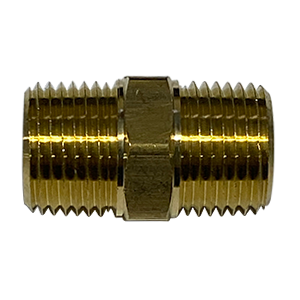
      My persistence here is because I like the control of the needle valve on the wok burner. The hardware store had other needle valves, but they were very light duty. And, am learning about MIP and FIP and NPT.

      This crowd loves acronyms; go for it.

      Comment


        #6
        When I was with the government one of my duties was HTEA which in the real world means “Having To Explain Acronyms.”
        However I’m retired from that so I will just post this link and let it do the explaining.

        What is the difference between NPT, FIP and MIP threads? NPT (National Pipe Thread), FIP (Female Iron Pipe), and MIP (Male Iron Pipe) are terms used to describe different types of pipe threads commonly used in plumbing and other industrial applications. These terms primarily refer to the gender of the thread (male or female) andRead More

        Comment


        • Alan Brice
          Alan Brice commented
          Editing a comment
          Very interesting, thank you.

        #7
        Update. After 3rd store trip, got needle valve connected between low pressure regulator and burner, which has its own valve. Opened needle valve full open, fired up smoker. No explosion, no burns, no leaks. Currently doing pastrami, oven temp between 225 and 300 F. Tweaking, but much finer adjustability. Smoker valve full open, needle turned in about 7 half turns. IT is 144, will wrap at 160.
        So far, I think this is an improvement. Time will tell. Ambient per Combustion probe is 261. IR gun pointed down thru top vent about 200F.

        Comment


          #8
          Originally posted by Donw View Post
          When I was with the government one of my duties was HTEA which in the real world means “Having To Explain Acronyms.”
          However I’m retired from that so I will just post this link and let it do the explaining.

          https://floflexinc.com/what-is-the-d...d-mip-threads/
          This is a good explanation. Further tips on sizing:

          Pipe threads (all of those described above) have dimension/sizes related to the nominal inside diameter (ID) of the pipe (makes sense certain sense in that the ID is what determines flow and capacity). So, if you are talking about 1/4" NPT/MPT the pipe or male fitting will be much larger than 1/4". I think it is about 5/16". Always best to bring the parts with you to the hardware store, lol.

          Only when referring to "tubing" will the size of a pipe match the nominal size. 1/2" copper tubing will be 1/2 inch outer diameter (OD). This can be especially frustrating when using pipe or tubing for non plumbing purposes. Compression fittings work on the outside and are for tubing, not pipe, LOL.

          Plumbing goes back before a lot of modern engineering and has lot of oddities. Nipples, sillcocks, flanges, pitchers, stems, bibs, petcocks, etc. And the preferred terms vary by region.

          Comment


          • RolfTaylor
            RolfTaylor commented
            Editing a comment
            Not to mention the "ballcock" which uses a unique sized fitting not used anywhere but for toilets. Garden hose thread is also unique to a single application.

        Announcement

        Collapse
        No announcement yet.
        Working...
        X
        false
        0
        Guest
        Guest
        500
        ["membership","help","nojs","maintenance","shop","reset-password","authaau-alpha","ebooklogin-start","alpha","start"]
        false
        false
        Yes
        ["\/forum\/free-deep-dive-guide-ebook-downloads","\/forum\/free-deep-dive-guide-ebook-downloads\/1157845-paid-members-download-your-6-deep-dive-guide-ebooks-for-free-here","\/forum\/the-pitcast","\/forum\/national-barbecue-news-magazine","\/forum\/national-barbecue-news-magazine\/national-barbecue-news-magazine-aa","\/forum\/national-barbecue-news-magazine\/national-barbecue-news-magazine-aa\/bbq-news-magazine-2019-issues","\/forum\/national-barbecue-news-magazine\/national-barbecue-news-magazine-aa\/bbq-news-magazine-2020-issues","\/forum\/national-barbecue-news-magazine\/national-barbecue-news-magazine-aa\/bbq-news-magazine-2021-issues","\/forum\/national-barbecue-news-magazine\/national-barbecue-news-magazine-aa\/bbq-news-magazine-2022-issues","\/forum\/national-barbecue-news-magazine\/national-barbecue-news-magazine-aa\/current-2023-issues","\/forum\/national-barbecue-news-magazine\/national-barbecue-news-magazine-aa\/current-2024-issues","\/forum\/national-barbecue-news-magazine\/national-barbecue-news-magazine-aa\/current-2025-issues","\/forum\/national-barbecue-news-magazine\/national-barbecue-news-magazine-aa\/current-2026-issues","\/forum\/bbq-stars","\/forum\/bbq-stars\/tuffy-stone","\/forum\/bbq-stars\/meathead","\/forum\/bbq-stars\/harry-soo","\/forum\/bbq-stars\/matt-pittman","\/forum\/bbq-stars\/kent-rollins","\/forum\/bbq-stars\/dean-fearing","\/forum\/bbq-stars\/tim-grandinetti","\/forum\/bbq-stars\/kent-phillips-brett-gallaway","\/forum\/bbq-stars\/david-bouska","\/forum\/bbq-stars\/ariane-daguin","\/forum\/bbq-stars\/jack-arnold","\/forum\/free-deep-dive-guide-ebook-downloads"]
        /forum/free-deep-dive-guide-ebook-downloads